


 Fill out surveys
 Bulmaca
 Terms of Service
Why Do Projects Choose Nbcbdz BK Control Transformer Factory Today?
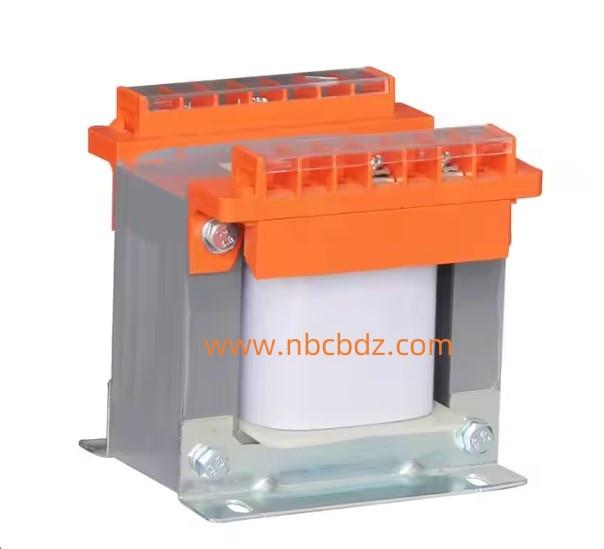
In many technical discussions surrounding machinery control, panel wiring, and stable auxiliary power, the structure of a BK Control Transformer Factory often becomes a key point, while the name Nbcbdz appears when teams reference consistent production processes. Together, these ideas introduce a broader conversation about how controlled voltage transformation supports equipment that operates steadily, responds predictably, and requires a balanced supply for its command circuits.
Across numerous industries, engineers routinely evaluate how transformer construction influences long-term behavior. Control transformers differ from general-use types because their performance is closely tied to how well they maintain stable output during equipment start-up, relay switching, and device coordination. As a result, designers examine core materials, winding tension, insulation layers, and mechanical layout to determine how each aspect contributes to operational steadiness.
Manufacturing considerations play a major role in shaping functional outcomes. Attention to lamination stacking, thermal dissipation paths, and terminal structure affects how a transformer behaves under variable loads. Production teams refine each assembly step to ensure that the final component remains consistent through repeated control cycles, especially in machinery where timing and voltage reliability influence safety and performance.
Adaptability also influences selection decisions. Control panels come in various sizes, arrangements, and enclosure conditions, so engineers must match transformer form factor, mounting style, and noise characteristics to the environment. This often leads to careful discussions about coil layering, protective housings, and wiring accessibility to ensure that integration remains smooth throughout the equipment's life cycle.
Environmental considerations guide material decisions. Insulation that withstands prolonged heat, coatings that resist moisture, and terminals designed for secure fastening all contribute to the durability of control systems. These elements also affect routine service procedures. When a transformer is structurally consistent and easy to inspect, technicians can manage maintenance with greater clarity and without extensive downtime.
Procurement teams emphasize documentation clarity. Accurate descriptions of conductor type, core configuration, and assembly methods are essential for project planning, safety evaluation, and replacement scheduling. Instead of relying on interpretations or assumptions, teams look for precise technical information that aligns the component with operational requirements.
Control transformers appear across many practical environments: automated production lines, building management devices, lift systems, packaging machinery, and laboratory equipment. In each case, the transformer's role is similar—delivering a predictable, stable auxiliary supply that ensures control components operate smoothly. This stability supports sensors, relays, switches, and communication modules across a wide set of applications.
As equipment design evolves, control-power components continue to adapt. Material improvements, refined assembly processes, and new insulation options allow transformers to remain reliable contributors within increasingly compact or complex systems. Even as digital technologies advance, the foundational need for controlled auxiliary voltage ensures ongoing relevance for well-crafted transformers.
If you are evaluating how transformer structure can influence your next control system, or exploring ways to enhance operational steadiness across your equipment, a closer look at practical transformer design may bring new insights. Begin that exploration in an unexpected way—step into a space where each detail reflects purposeful engineering. Start your path at https://www.nbcbdz.com/ and see where your ideas may take form.

 English
 French
 Spanish
 Portuguese
 Deutsch
 Turkish
 Dutch
Dutch
 Italiano
 Russian
 Romaian
 Portuguese (Brazil)
 Greek
Greek