


 Anket Doldur
 Bulmaca
 Hizmet Şartları
Kunliwelding Selection: Does Equipment Limit Wire Diameter?
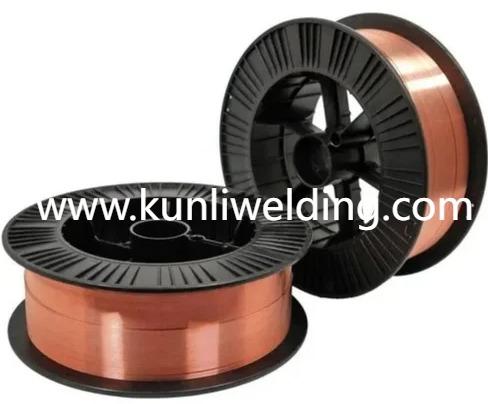
Wire diameter selection might seem like a mundane technical detail compared to choosing the right alloy composition or optimizing welding parameters, yet this seemingly simple specification profoundly influences everything from arc characteristics and penetration depth to deposition rates and operator control throughout aluminum welding operations. Many fabricators default to familiar wire sizes without considering how diameter affects their specific applications and equipment capabilities. Kunli Aluminum Welding Wire Manufacturers produce filler materials in various diameter options because different sizes serve distinct purposes, and understanding these relationships enables welders to optimize their processes for improved quality, productivity, and cost effectiveness across diverse aluminum fabrication scenarios.
Current density represents the fundamental relationship between wire diameter and welding performance, defining how much electrical current passes through each unit of wire cross sectional area. Smaller diameter wires carry higher current density at any given amperage setting compared to larger wires, creating hotter, more focused arcs that penetrate deeply into base materials. This intense heat concentration proves valuable for joining thick sections or achieving full penetration welds, but the same characteristic can cause burn through problems on thin gauge materials where excessive penetration melts completely through the workpiece. Larger diameter wires distribute current across greater cross sectional area, reducing current density and creating broader, less penetrating heat patterns suitable for thin materials or situations where controlled heat input prevents distortion.
Deposition rate differences between wire diameters directly impact productivity in applications requiring substantial weld metal volume. Larger diameter wires deliver more filler material per unit time at equivalent wire feed speeds, filling joint volumes faster and reducing the time required for completing welds. This deposition advantage proves particularly valuable in thick section fabrication, heavy structural welding, or production environments where cycle time governs throughput. However, the increased deposition comes with tradeoffs in puddle control and positional welding capability that make larger wires less suitable for certain applications despite their productivity advantages.
Puddle control and manipulation ease vary significantly between wire diameters, affecting operator ability to manage molten metal behavior during welding. Smaller diameter wires create more manageable puddle sizes that respond quickly to torch manipulation, enabling greater control in detailed work, intricate joint geometries, or out of position welding where gravity challenges puddle management. The smaller puddles cool and solidify faster, reducing the time window during which molten metal can sag or run, making vertical and overhead welding more controllable. Larger diameter wires generate substantial puddles requiring greater skill to manage, particularly in positional welding where gravity constantly works against the welder attempting to maintain proper bead shape and prevent sagging.
Equipment compatibility determines which wire diameters can be used with particular welding systems. Contact tips, liners, and drive roll grooves are sized for specific wire diameter ranges, and attempting to use incompatible sizes creates feeding problems, poor electrical contact, and erratic arc behavior. Smaller diameter wires sometimes feed unreliably through equipment designed for larger sizes because inadequate support allows buckling within the cable assembly. Conversely, forcing larger diameter wire through undersized liners creates excessive friction causing feeding resistance and wire deformation. Understanding equipment limitations and matching wire diameter to system capabilities prevents frustrating feeding problems that compromise weld quality and operator productivity.
Material thickness guidelines help match wire diameter to base metal dimensions for balanced heat input and appropriate filler volume. Thin gauge aluminum sheets typically weld more successfully with smaller diameter wires that provide controlled heat input preventing burn through while delivering adequate filler for proper joint formation. Intermediate thickness materials accept mid range wire diameters offering balanced deposition and heat control. Heavy sections benefit from larger diameter wires that deliver the substantial heat input and filler volume these applications demand without requiring impractically slow welding speeds. While skilled welders can often adapt parameters to use non ideal wire sizes, starting with appropriately sized wire for material thickness simplifies achieving acceptable results.
Welding position influences optimal wire diameter selection because positional requirements affect puddle management difficulty. Flat position welding tolerates larger diameter wires and their substantial puddles because gravity helps flatten and control the molten metal. Horizontal welding presents moderate challenges manageable with mid range wire sizes. Vertical and overhead positions demand smaller diameter wires producing manageable puddles that skilled welders can control despite gravity working against them. Attempting positional welding with excessively large diameter wire creates frustrating puddle control problems even for experienced operators.
Arc starting characteristics differ between wire diameters, with smaller wires initiating arcs more readily due to their higher current density at the wire tip. Larger diameter wires sometimes require higher initial current settings or longer contact time to establish stable arcs, potentially creating cold starts or excessive spatter during arc initiation. Understanding these starting behavior differences helps welders adjust their technique for reliable arc establishment regardless of wire diameter.
Cost considerations extend beyond simple per pound pricing to include deposition efficiency and labor productivity impacts. While larger diameter wire may cost more per unit weight, the faster deposition it enables can reduce overall project costs through decreased labor hours despite higher material costs. Conversely, smaller diameter wire requiring longer welding times might prove more economical for detailed work where its controllability reduces rework and improves first time quality.
Spatter generation and cleaning requirements vary with wire diameter due to different arc force characteristics and metal transfer behavior. Smaller diameter wires generally produce less spatter when properly adjusted, reducing post weld cleanup labor. Larger diameter wires may generate more spatter requiring additional surface preparation before coating or finishing operations.
Joint accessibility in confined spaces sometimes dictates wire diameter selection when torch size and manipulation room become limiting factors. Smaller diameter wires work with more compact torch configurations suitable for restricted access welding where larger torch assemblies cannot fit.
Travel speed relationships with wire diameter affect how quickly welders can complete joints while maintaining quality. Smaller wires permit faster travel with proper parameter coordination, while larger wires typically require slower movement to properly distribute the increased filler volume.
Understanding these diameter relationships enables systematic wire selection matching specific application requirements rather than relying on arbitrary preferences or limited experience with only certain wire sizes. Comprehensive wire diameter options and technical selection guidance are available at https://www.kunliwelding.com/ supporting fabricators optimizing their aluminum welding processes.

 English
 Arabic
 French
 Spanish
 Portuguese
 Deutsch
 Dutch
Dutch
 Italiano
 Russian
 Romaian
 Portuguese (Brazil)
 Greek
Greek