


 Anket Doldur
 Bulmaca
 Hizmet Şartları
Green Wheels: The Rise of Electric Vehicles Across Latin America
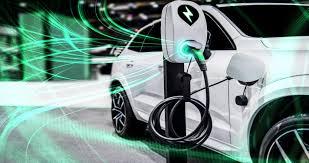
Latin America Electric Vehicle Market: Growth Trends, Opportunities, and Future Outlook (2024–2030)
Market Overview
The Latin America Electric Vehicle (EV) Market was valued at USD 1.10 Billion in 2023 and is projected to grow at a compound annual growth rate (CAGR) of 14.32% from 2024 to 2030, reaching approximately USD 2.81 Billion by 2030. This strong growth trajectory reflects the region’s increasing commitment to sustainable mobility, technological modernization, and reduced carbon emissions.
Electric vehicles represent a major shift in transportation, driven by advancements in battery technology, power electronics, and digital connectivity. Across Latin America, governments, private enterprises, and consumers are gradually embracing EVs as viable alternatives to conventional vehicles. Rising environmental awareness, urban pollution concerns, and growing fuel prices are further accelerating the transition toward electric mobility.
The market is witnessing notable investments from global players such as BYD, Tesla, and Nissan. BYD has expanded its electric bus operations in Brazil and Chile, while Tesla continues to strengthen its charging infrastructure across major cities. Nissan has also introduced region-specific EV models, improving accessibility and consumer adoption. These developments indicate a rapidly evolving ecosystem where policy support, innovation, and demand are shaping the future of transportation.
♦ Request a Free Sample Copy or View Report Summary:https://www.maximizemarketresearch.com/request-sample/64133/
Market Dynamics
Key Drivers
Rising Fuel Costs and Economic Incentives
Escalating fuel prices across Latin American countries have encouraged consumers to explore cost-efficient alternatives. Electric vehicles offer lower operating and maintenance costs, making them attractive in economies sensitive to fuel price fluctuations. In countries such as Uruguay and Argentina, rising fuel expenses have significantly boosted interest in EVs like the Nissan Leaf and Renault Zoe.
Government Policies and Infrastructure Development
Several governments in the region are actively promoting EV adoption through tax exemptions, subsidies, and import duty reductions. Brazil, for example, provides fiscal incentives that have supported rapid growth in EV sales. Similarly, Chile’s collaboration with energy companies such as Enel X and Engie has led to substantial investments in charging infrastructure, strengthening consumer confidence.
Technological Advancements
Innovations in battery efficiency, charging speed, and driving range are transforming consumer perceptions of electric vehicles. Volkswagen’s introduction of the ID.4 in South America, equipped with advanced battery systems, demonstrates how technology is enhancing reliability and performance. Improved battery life and reduced degradation have made EVs more practical for daily and long-distance use.
Declining Battery Costs
Falling lithium-ion battery prices have played a crucial role in improving affordability. Manufacturers such as Chery are leveraging lower production costs to introduce competitively priced EV models like the Arrizo, targeting price-sensitive markets such as Argentina and Peru. This trend is expanding market penetration across middle-income consumer groups.
Growing Environmental Awareness
Environmental sustainability is becoming a key factor in purchasing decisions. Countries like Colombia and Chile have implemented green mobility policies that encourage low-emission transportation. Increased sales of models such as the Chevrolet Bolt reflect the rising preference for eco-friendly vehicles among urban consumers.
Market Restraints
Limited Charging Infrastructure
Inadequate charging networks remain a major challenge, particularly in Brazil, Argentina, and rural regions. Limited public charging stations reduce convenience and increase range anxiety, slowing adoption despite rising interest.
High Initial Purchase Costs
Although operating costs are lower, the upfront price of EVs remains high in countries such as Colombia and Peru. Premium models like the Tesla Model 3 are often beyond the reach of average consumers, restricting mass-market adoption.
Range and Performance Concerns
Concerns about limited driving range continue to affect consumer confidence in markets such as Chile and Uruguay. While technology has improved, long-distance travel remains challenging in areas with sparse charging infrastructure.
Limited Model Availability
In smaller markets like Ecuador and Bolivia, restricted availability and limited variety of EV models constrain consumer choice, reducing market expansion potential.
Policy Uncertainty and Awareness Gaps
Inconsistent government policies, unclear incentive frameworks, and limited public awareness in countries such as Paraguay and Venezuela create uncertainty. Misinformation regarding battery life, resale value, and maintenance costs further impacts consumer trust.
Supply Chain and Battery Challenges
Disruptions in battery supply and component manufacturing in Argentina and Chile affect production stability. Additionally, prolonged charging times and inadequate rural infrastructure limit EV adoption outside major urban centers.
♦ Request a Free Sample Copy or View Report Summary:https://www.maximizemarketresearch.com/request-sample/64133/
Segment Analysis
By Type
Battery Electric Vehicles (BEVs)
BEVs dominated the Latin America EV market in 2023 due to their zero-emission nature and strong government support. They are particularly popular in metropolitan areas, where charging facilities and environmental regulations are more developed.
Plug-in Hybrid Electric Vehicles (PHEVs)
PHEVs represent the fastest-growing segment, offering flexibility through dual power systems. They are preferred by consumers seeking extended range and reliability in regions with limited charging infrastructure.
Hybrid Electric Vehicles (HEVs)
HEVs remain popular as transitional solutions, especially in emerging markets. They do not require external charging and serve as an entry point for consumers shifting toward electric mobility.
Overall, BEVs dominate urban usage, PHEVs suit mixed driving conditions, and HEVs support gradual electrification in infrastructure-limited regions.
By Vehicle Type
-
Two-Wheelers: Gaining popularity for last-mile mobility and urban commuting
-
Passenger Cars: Largest segment driven by private consumers and fleet operators
-
Commercial Vehicles: Growing adoption in logistics and public transport sectors
Regional Insights
Brazil: Market Leader
Brazil holds the largest share in the Latin America Electric Vehicle Market due to its strong automotive manufacturing base, supportive government policies, and expanding infrastructure. The country plays a critical role in battery production, vehicle assembly, and component manufacturing.
Argentina: Emerging Production Hub
Argentina contributes significantly through battery manufacturing and EV assembly operations. Its focus on localized production is strengthening regional supply chains.
Chile and Colombia: High Consumption Markets
Chile and Colombia lead in EV consumption, driven by environmental initiatives, public transport electrification, and private sector participation. Chile, in particular, has emerged as a hub for electric buses and urban mobility solutions.
Regional Trade Dynamics
While Brazil and Argentina dominate production, cross-border trade in EV components and finished vehicles remains strong. Imports and exports play a vital role in balancing supply and demand across the region.
♦ Make Smarter Decisions in 2026 — Get Your Research Report Now: https://www.maximizemarketresearch.com/market-report/latin-america-electric-vehicle-market/64133/
Competitive Landscape
Key players operating in the Latin America Electric Vehicle Market include:
-
Renault (France)
-
Nissan (Japan)
-
Chevrolet (USA)
-
BYD (China)
-
Volkswagen (Germany)
-
Tesla (USA)
-
Chery (China)
-
BMW (Germany)
-
Jaguar Land Rover (UK)
-
Hyundai (South Korea)
These companies are focusing on regional partnerships, localized manufacturing, and infrastructure investments to strengthen their market presence.
Future Outlook
The Latin America Electric Vehicle Market is poised for sustained growth through 2030, supported by regulatory backing, technological innovation, and increasing environmental awareness. Continued investments in charging infrastructure, battery recycling, and renewable energy integration will further enhance market development.
As affordability improves and awareness increases, EV adoption is expected to expand beyond major cities into semi-urban and rural areas. Strategic collaborations between governments, automakers, and energy providers will be essential in creating a robust and inclusive electric mobility ecosystem.
◉ Get Market Research Latest Trends
Titanium Market https://www.maximizemarketresearch.com/market-report/titanium-market/126890/
Vodka Market https://www.maximizemarketresearch.com/market-report/global-vodka-market/116603/
Go Kart Market https://www.maximizemarketresearch.com/market-report/go-kart-market/124634/
About Maximize Market Research:
Maximize Market Research is a multifaceted market research and consulting company with professionals from several industries. Some of the industries we cover include medical devices, pharmaceutical manufacturers, science and engineering, electronic components, industrial equipment, technology and communication, cars and automobiles, chemical products and substances, general merchandise, beverages, personal care, and automated systems. To mention a few, we provide market-verified industry estimations, technical trend analysis, crucial market research, strategic advice, competition analysis, production and demand analysis, and client impact studies.
Contact Maximize Market Research:
3rd Floor, Navale IT Park, Phase 2
Pune Bangalore Highway, Narhe,
Pune, Maharashtra 411041, India
sales@maximizemarketresearch.com
+91 96071 95908, +91 9607365656

 English
 Arabic
 French
 Spanish
 Portuguese
 Deutsch
 Dutch
Dutch
 Italiano
 Russian
 Romaian
 Portuguese (Brazil)
 Greek
Greek