


 Fill out surveys
 Bulmaca
 Terms of Service
Can ER5087 Handle the Toughest Structural Challenges at Sea
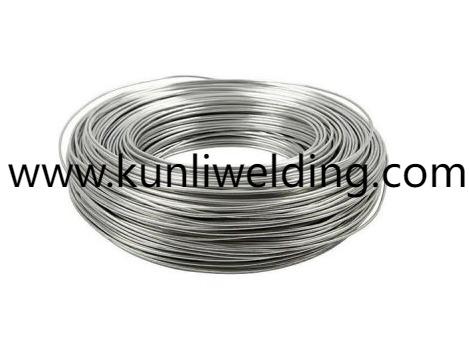
Recent surges in offshore renewable energy and commercial shipping have placed renewed focus on materials that can endure relentless marine conditions. Engineers and fabricators increasingly specify alloys that balance weight reduction with lasting durability. In this evolving landscape, Aluminum Welding Wire ER5087 has emerged as a material that meets stringent structural demands without adding unnecessary mass.
The alloy incorporates a carefully balanced magnesium content that contributes to improved mechanical properties after welding. This composition helps achieve joints that maintain integrity when subjected to cyclic loading common in wave-battered structures. Fabricators working on hull sections, superstructures, and support frames report that the finished welds show favorable resistance to cracking under repeated stress.
Corrosion remains a primary concern for anything that operates in saltwater. The specific chemistry of this wire forms protective layers more readily than many traditional aluminum filler metals. As vessels and platforms spend decades in service, this characteristic reduces maintenance intervals and extends overall lifespan. Yards building everything from fast ferries to research ships have noted cleaner weld profiles and fewer post-weld repairs when using this alloy.
Weldability plays a crucial role in daily production. The wire feeds smoothly through standard equipment, producing stable arcs and minimal spatter. Operators appreciate the consistent droplet transfer that leads to uniform bead appearance. These handling characteristics allow welding teams to maintain high travel speeds while still achieving required penetration, a practical advantage on large projects with tight schedules.
Transitioning to lighter materials has become a priority across multiple industries. Aluminum structures weigh considerably less than steel equivalents, improving fuel efficiency in ships and easing transportation of modular components. Yet strength cannot be sacrificed. The enhanced tensile properties delivered by this magnesium-alloy wire enable designers to reduce section thickness in many areas while staying within safety margins. This combination supports both performance goals and regulatory compliance.
Thermal conductivity also deserves mention. Aluminum dissipates heat rapidly, which can complicate welding in thick sections. The formulation of ER5087 helps manage heat input, lowering the risk of distortion in heat-sensitive assemblies. Welders working on precision frameworks find they can place multiple passes with reduced worry about warping critical dimensions.
Industry feedback highlights another advantage during inspection stages. Radiographic and ultrasonic testing often reveal fewer internal imperfections compared to some earlier filler metals. Clean internal structure translates to higher acceptance rates and less rework, keeping projects on timeline and within budget.
As global trade expands and coastal populations grow, the volume of marine construction continues upward. Ports modernize, cruise terminals expand, and floating infrastructure gains traction. Each new build requires thousands of meters of reliable welds. Specifiers who once defaulted to familiar grades now evaluate newer options that promise longer service intervals and reduced life-cycle costs.
The same wire finds application beyond shipbuilding. Industrial platforms, bridge components exposed to de-icing salts, and architectural installations near coastlines benefit from similar corrosion-fighting traits. Wherever aluminum frameworks face aggressive environments, the material properties align with real-world needs.
Fabricators value suppliers who maintain stable chemistry batch after batch. Consistent magnesium levels and trace elements ensure that weld properties remain predictable across an entire project. This reliability matters when qualification testing occurs early and production runs stretch over months or years.
Training centers have updated their curricula to include hands-on sessions with this alloy. New welders quickly grasp the parameter windows and recognize the characteristic arc sound that signals optimal conditions. Experienced hands appreciate that technique adjustments from more common 5xxx series wires are minimal, easing the learning curve on mixed-material jobs.
Looking ahead, ongoing research into surface treatments and hybrid joining methods may further expand application possibilities. For now, the combination of strength, corrosion behavior, and practical welding characteristics already satisfies many demanding specifications.
Companies seeking a dependable source for this specialized wire can turn to www.kunliwelding.com . The site presents detailed insights into performance advantages and typical use cases drawn from actual marine and structural projects. Visitors find technical overviews, application photographs, and guidance on selecting the right diameter for different joint configurations. Whether planning a new offshore module or upgrading existing aluminum infrastructure, the information available at kunliwelding.com helps teams make informed material choices that align with both current needs and future service demands.

 English
 Arabic
 French
 Portuguese
 Deutsch
 Turkish
 Dutch
Dutch
 Italiano
 Russian
 Romaian
 Portuguese (Brazil)
 Greek
Greek