


 Fill out surveys
 Bulmaca
 Terms of Service
How Does Joint Geometry Influence Wire Choice?
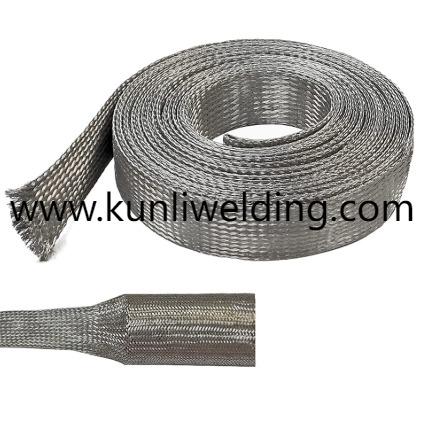
Critical aluminum structures demand filler materials that can withstand demanding operational conditions while maintaining structural integrity over extended service periods. The decision between Aluminum Welding Wire ER5087 and ER5356 involves evaluating multiple performance characteristics that directly impact safety, longevity, and reliability. Both options serve the aluminum fabrication industry well, yet their distinct attributes make each more suitable for particular structural scenarios and environmental contexts.
Stress corrosion cracking susceptibility varies meaningfully between these two aluminum magnesium welding wires. Certain compositions demonstrate greater resistance to this insidious failure mode that develops gradually under sustained tensile loads in corrosive atmospheres. Structures exposed to marine environments, industrial pollutants, or chemical processing areas face elevated risk of stress corrosion phenomena. Selecting a filler material with inherent resistance to this degradation mechanism provides an added margin of safety for critical assemblies where failure could endanger personnel or operations.
Fatigue performance becomes paramount in structures subjected to cyclic loading patterns. Bridges, lifting equipment, transportation components, and machinery frameworks all experience repetitive stress cycles that can initiate and propagate cracks over time. The microstructural features and mechanical properties of different welding wires influence their ability to resist fatigue crack initiation and growth. Matching filler material characteristics to expected loading patterns helps ensure joints maintain integrity throughout their design life.
Post weld heat treatment considerations affect material selection when stress relief or property modification becomes necessary after fabrication. Some aluminum alloy combinations respond favorably to thermal treatments while others may experience property degradation or dimensional instability. Critical structures requiring heat treatment for residual stress management need filler materials compatible with these thermal cycles. Understanding how each welding wire behaves during and after heat treatment prevents unintended consequences that could compromise structural performance.
Joint configuration complexity influences which filler material proves more practical for a given application. Intricate geometries with restricted access, multiple pass requirements, or difficult welding positions may favor one alloy over another based on puddle fluidity, arc characteristics, and solidification behavior. Aluminum Welding Wire ER5087 and ER5356 each display distinct handling qualities that affect ease of use in various joint designs. Fabricators must consider whether the chosen material can be reliably deposited in all required positions and configurations.
Temperature service ranges impact filler metal selection for structures operating in elevated or cryogenic conditions. Mechanical properties change with temperature, and different alloy compositions exhibit varying degrees of property retention outside ambient conditions. Cryogenic applications demand materials maintaining toughness and ductility at low temperatures, while elevated temperature service requires resistance to thermal softening and creep. Matching the filler metal temperature capabilities to actual operating conditions ensures reliable performance across the intended service envelope.
Base metal compatibility extends beyond simple strength matching to include considerations of galvanic potential, thermal expansion alignment, and metallurgical bonding characteristics. Dissimilar metal combinations can create electrochemical cells promoting accelerated corrosion in certain environments. Thermal expansion mismatches generate internal stresses during temperature fluctuations. Some base metal and filler metal pairings achieve better fusion and minimize defect formation. Evaluating the complete material system rather than isolated components leads to more successful outcomes.
Quality assurance requirements and inspection accessibility also factor into material decisions for critical structures. Some filler materials produce weld beads more amenable to nondestructive testing methods, while others may require more extensive examination protocols. Regulatory requirements and industry standards often specify acceptable filler materials for particular applications, narrowing the selection field.
Weighing these interconnected factors systematically helps engineers and fabricators arrive at sound material choices that balance performance requirements with practical constraints and cost considerations. Visit https://kunliwelding.psce.pw/8hphzd to access technical resources and material specifications that support informed welding wire selection for your critical aluminum projects.

 English
 Arabic
 French
 Spanish
 Portuguese
 Deutsch
 Turkish
 Dutch
Dutch
 Italiano
 Russian
 Portuguese (Brazil)
 Greek
Greek