


 Fill out surveys
 Bulmaca
 Terms of Service
Kunliwelding Solutions for Dynamic Equipment Connections
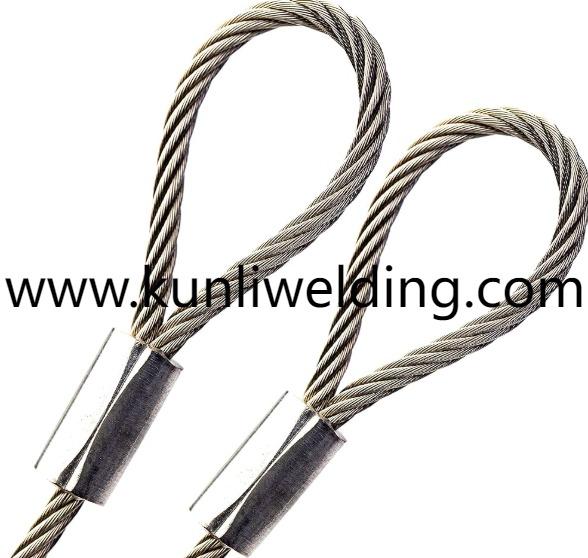
Machinery and equipment operating in dynamic environments face challenges that static installations never encounter. Vibration, flexing, and constant motion impose stresses that quickly destroy rigid components. Electrical connections in these demanding situations require special consideration to maintain reliable operation without frequent failures. Aluminum Braided Wire Manufacturers have developed solutions specifically engineered to survive conditions that would fracture solid conductors within short timeframes. Understanding why braided construction excels in vibration prone applications reveals important principles about material behavior under cyclic stress.
Solid conductors fail predictably when subjected to repeated bending or vibration. The metallurgical structure of rigid materials concentrates stress at bend points, initiating microscopic cracks that propagate with each motion cycle. These fatigue cracks grow gradually until the conductor fractures completely, causing sudden electrical failure. The failure mode occurs without warning, leaving systems inoperative until repairs restore connections. This unpredictable breakdown creates maintenance headaches and potential safety hazards in critical applications.
Braided construction distributes mechanical stress across numerous individual strands rather than concentrating it in single locations. When the assembly flexes or vibrates, each strand moves slightly relative to its neighbors. This motion sharing prevents any single strand from experiencing the full magnitude of imposed stress. Individual strands may eventually fail after extended service, but the remaining intact strands continue carrying current. Gradual degradation replaces sudden catastrophic failure, providing warning through increased resistance before complete breakdown occurs.
Flexibility inherent in braided designs accommodates installation geometries that rigid conductors cannot navigate. Equipment designers often face tight spaces with multiple direction changes between connection points. Solid wire forced into sharp bends creates stress concentrations that accelerate fatigue failure. Braided assemblies bend smoothly through complex paths without developing the internal stresses that plague rigid alternatives. This installation flexibility simplifies routing and reduces mechanical strain throughout the conductor length.
Vibration frequency and amplitude determine the severity of fatigue loading on electrical connections. High frequency oscillations with small amplitudes can prove just as damaging as lower frequency motions with greater displacement. The cumulative effect of millions or billions of stress cycles eventually exhausts material fatigue resistance. Braided construction extends this fatigue life dramatically by reducing stress per cycle through its distributed loading characteristics. Components that would require frequent replacement using solid conductors operate reliably for extended periods when connected with braided alternatives.
Thermal expansion and contraction during temperature cycling creates additional mechanical stress in electrical systems. Different materials expand at different rates, generating forces at connection interfaces and within conductor bodies. Rigid conductors must absorb these thermally induced stresses, adding to fatigue damage from vibration. The flexibility of braided assemblies allows them to accommodate thermal movement without building internal stress. This stress relief extends service life in applications experiencing both vibration and temperature variation.
Strand mobility within braided structures provides self healing properties absent in solid conductors. As individual strands break from fatigue, remaining strands redistribute the mechanical and electrical load. The braided geometry maintains physical integrity even as component strands fail progressively. This graceful degradation contrasts sharply with the sudden complete failure of solid wire. Maintenance personnel can monitor resistance increases that signal degradation, scheduling replacements during planned downtime rather than responding to emergency failures.
Weight considerations favor aluminum construction in mobile equipment where mass directly impacts performance. Transportation applications particularly benefit from conductor materials that minimize weight penalties while maintaining electrical and mechanical requirements. The combination of aluminum base material with braided construction creates lightweight flexible connections suitable for vibration intensive environments. This weight advantage compounds across large installations containing numerous conductor runs.
Corrosion resistance in braided assemblies depends on protective treatments applied during manufacturing. Exposed aluminum surfaces naturally form oxide layers that provide some protection against environmental attack. Additional coatings or platings enhance corrosion resistance in harsh atmospheres containing moisture, salt, or chemical contaminants. The multiple strand construction of braided wire presents greater surface area potentially vulnerable to corrosion compared to solid conductors. However, proper protective treatments effectively seal surfaces against environmental exposure, ensuring long term durability.
Installation practices significantly influence how well braided conductors perform in vibration environments. Proper strain relief at termination points prevents stress concentration where flexible conductors attach to rigid components. Adequate support spacing along conductor runs prevents excessive sagging or whipping during vibration. Routing that avoids sharp bends maintains the stress distribution benefits inherent in braided construction. Following manufacturer installation guidelines ensures conductors realize their full fatigue resistance potential.
Termination hardware designed specifically for braided conductors ensures reliable electrical connections that withstand mechanical stress. Standard terminals developed for solid wire may not provide adequate grip on flexible braided assemblies. Specialized compression fittings or crimp connectors designed for braided construction create secure mechanical and electrical interfaces. Proper termination technique becomes crucial for achieving connection reliability matching the fatigue resistance of the conductor body itself.
Inspection and maintenance protocols for vibration prone installations should include periodic conductor examination. Visual inspection can reveal fraying, strand breakage, or insulation damage indicating approaching end of service life. Resistance measurements detect electrical degradation before complete failure occurs. Proactive replacement based on condition monitoring prevents unexpected downtime and maintains system reliability throughout operational life. For applications requiring flexible electrical connections capable of withstanding demanding vibration environments, comprehensive solutions and technical expertise are available at https://www.kunliwelding.com/ .

 English
 Arabic
 French
 Spanish
 Deutsch
 Turkish
 Dutch
Dutch
 Italiano
 Russian
 Romaian
 Portuguese (Brazil)
 Greek
Greek